

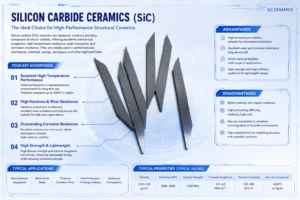

Build an RFQ around the substrate’s active area, mounting scheme, thickness control, surface condition and integration method. Porcecore can review the drawing and help identify the information needed for a technically comparable quotation.
Key Inquiry Requirements
Start with the substrate’s role
A silicon carbide ceramic substrate may function as a support, insulating platform, process carrier, protective sheet or structural base, depending on the assembly. Explain what sits on each face, how the substrate is retained and which surfaces are functionally active. Include the drawing, revision, section views and a simple assembly sketch whenever the component interacts with clamps, coatings, conductors or seals.
Identify the consequences of failure or distortion in the surrounding product. State whether the substrate must remain flat for deposition, bonding, contact, alignment or fluid handling. The supplier also needs to know whether the part is installed individually, stacked, framed or processed in a fixture, because the relevant geometry and handling risks may differ.
Material selection and application conditions
Silicon carbide should be treated as a material family requiring a defined grade or specification for quotation. Describe the thermal exposure, atmosphere, chemical contact, mechanical loading and electrical role that led to the selection. If the substrate will be cleaned, coated, heated, cooled or repeatedly handled, include those process steps instead of assuming the material name communicates the full duty cycle.
Ask suppliers to state the proposed material designation, processing assumptions and documentation available for the selected grade. Where thermal, electrical, chemical or mechanical properties affect the design, define the values or test methods needed for comparison. This makes it easier to distinguish a suitable technical proposal from a quotation based only on a generic substrate label.
Active surfaces, patterns and edges
Substrates often include more than a length, width and thickness. Show holes, slots, pockets, fiducials, grooves, metallized zones, masked regions, cutouts and keep-out areas on the controlled drawing. Identify which features are applied before or after ceramic finishing, and indicate whether either face must remain free from handling marks, residue or local variation.
Surface requirements should be linked to the process that follows. State whether the part will receive a coating, bond, deposited layer, printed pattern or direct component attachment. Request a defined inspection method for flatness, thickness, feature position, surface texture and visible damage, with clear acceptance criteria for chips, cracks, stains and edge defects.
Mounting and process compatibility
Describe the substrate’s mounting condition in the final product and during processing. Include support points, clamping direction, contact materials, fastening method, adhesive or braze usage, cleaning chemistry and any thermal transition. A substrate that appears dimensionally acceptable may still be unsuitable if the mounting arrangement concentrates stress or leaves insufficient clearance for process movement.
If the substrate is used in a repeatable production process, explain how it is loaded, oriented, cleaned and inspected. Request sample evaluation or first-article review when the design includes unfamiliar cutouts, thin regions or surface treatments. Agree whether verification is dimensional, visual, functional or application-based, and how nonconforming parts will be identified.
Prepare a comparable substrate RFQ
Include the controlled drawing, material requirement, quantity range, application description, process sequence, mating-part information and inspection plan. Add packaging, cleanliness, labeling and traceability requirements if they influence handling or downstream yield. If the design is provisional, list open questions and identify which dimensions or properties are still subject to engineering approval.
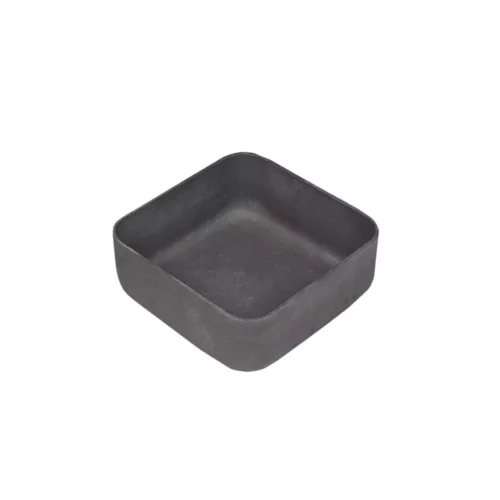
Ask for a response that separates material, forming, machining, finishing and inspection assumptions. Request supplier comments on difficult features, supported tolerances and proposed verification points. A clear response format helps buyers compare technical fit, documentation and risk without assuming that a pictured substrate represents inventory, a fixed process or a guaranteed application result.
Questions Before You Inquire
What makes a silicon carbide substrate RFQ complete?
Include the controlled drawing, material designation or required family, thickness and flatness priorities, active surfaces, mounting method, process environment, quantity range and inspection criteria. Add a sectioned assembly view when coatings, fixtures, bonding or thermal cycling are involved. The clearer the interfaces, the more useful the feasibility response.
Should both substrate faces be specified?
Yes. Identify whether each face is functional, cosmetic, bonded, coated, clamped or simply handled. State the required surface condition and any protected areas separately for each face. This prevents suppliers from applying one general finish assumption to surfaces that have different process or assembly responsibilities.
How do I compare substrate quotations?
Compare the proposed material designation, geometry assumptions, surface and edge controls, inspection method, documentation and stated exceptions. Check whether the quotation addresses features such as slots, holes, coatings or keep-out zones. A lower price is not technically comparable if critical acceptance criteria were omitted or interpreted differently.
Can a substrate be quoted before the process is finalized?
Often an early feasibility review is possible, but the quotation should identify assumptions and unresolved risks. Provide the best available process description, expected temperatures or chemicals, mating information and target geometry. Treat early pricing as conditional until material, surface, mounting and inspection requirements are confirmed.
Send a Clear Component Brief
Share your drawing, quantity and application with Porcecore. Mark the requirements that are fixed and the questions that remain open.

Reviews
There are no reviews yet.