

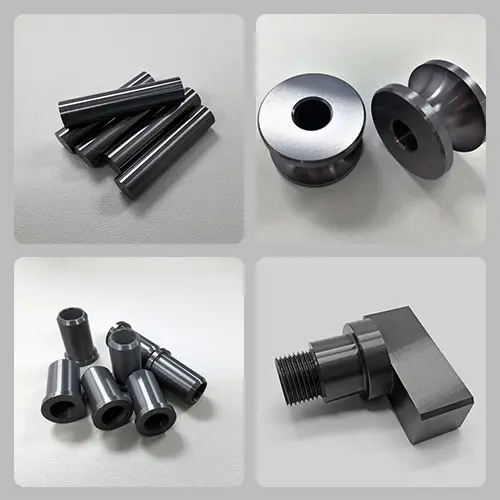

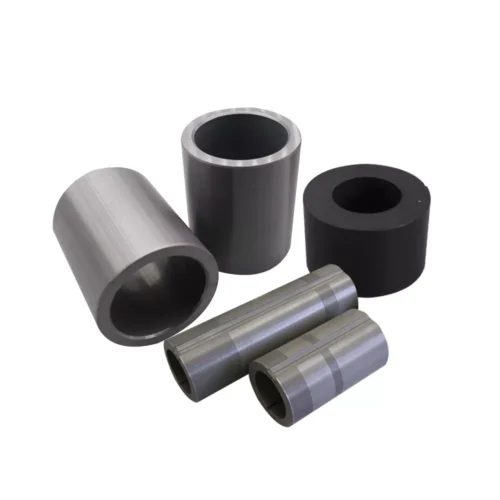
Use this page to prepare an RFQ for a silicon nitride ceramic bearing component. Porcecore can review the drawing, application conditions, mating parts and inspection expectations without treating the pictured item as an inventory promise.
Key Inquiry Requirements
Define the bearing component
A silicon nitride ceramic bearing may refer to a ball, a bearing ring assembly, or another rolling-element configuration. Your RFQ should identify the exact supplied item, bearing architecture, contact surfaces and assembly scope. Include a current drawing or controlled model showing diameters, radii, shoulders, grooves, reference datums and any features that affect installation or running alignment.
State whether the requirement concerns loose balls, a complete bearing, replacement elements or a custom ceramic component. Describe the shaft, housing, cage, lubricant and adjacent materials so the supplier can review interfaces rather than interpret the product name alone. If the design is still developing, identify the application objective and the dimensions that remain open for engineering discussion.
Describe the operating envelope
Bearing selection depends on how the component is loaded, guided, lubricated and maintained. Provide radial or axial loading information, speed range, duty cycle, start-stop behavior and expected motion. Also explain whether the environment involves moisture, particles, vacuum, chemicals, electrical isolation needs or repeated cleaning, because these conditions may influence material selection and surface requirements.
Avoid replacing application data with a broad statement such as high performance or long life. Identify the actual failure concerns, including wear, spalling, fracture, seizure, contamination or dimensional change. Where available, provide test history, competitor part numbers and the acceptance logic used by your engineering team, while separating targets from requirements already validated in your design.
Compare material and construction choices
Silicon nitride should be compared with the alternative materials relevant to your bearing design, not selected from a material label alone. Ask suppliers to explain how the proposed ceramic grade, manufacturing route, finishing method and assembly configuration relate to your contact geometry and environment. The comparison should address suitability, manufacturability, risk and inspection capability.
For hybrid or full-ceramic arrangements, define which parts are ceramic and which remain metallic or polymeric. Request clear identification of the proposed material family and any permitted substitutions. If a specific grade, surface treatment, cage material or lubricant is mandatory, place it in the RFQ as a controlled requirement rather than assuming it from the product name.
Inspection and documentation
Inspection should follow the features that control bearing behavior. Specify dimensional characteristics, roundness or profile checks where relevant, surface condition, edge integrity, visual criteria and any runout or assembly checks required by your drawing. Identify critical characteristics with tolerances and datums, and distinguish them from dimensions included only for reference.
Ask for a sample inspection report format before production approval if your quality process requires traceable results. Your RFQ may also request material identification, lot references, process notes, nonconformance handling and packaging controls. Do not ask for unsupported certificates or numerical guarantees by default; define exactly which records are necessary for release and incoming inspection.
Build a usable RFQ package
A useful inquiry should include the part number, revision, quantity for quotation, forecast context if known, drawing files, mating-part information and intended application. Mark all open questions clearly, especially where the bearing may be supplied as a loose element or as an assembled unit. State the requested quotation currency and delivery destination only when those commercial details are ready.
Invite the supplier to list assumptions, exclusions and technical questions with the quotation. Ask for proposed inspection points, manufacturability feedback and any drawing conflicts before approval. This creates a reviewable path from concept to production without implying stock, minimum order quantity, price, lead time or guaranteed service performance.
Questions Before You Inquire
Can I request loose silicon nitride bearing balls?
Yes, if the drawing identifies loose balls as the required form. Include ball diameter, grade or material constraints, quantity basis, surface expectations, inspection method and the mating bearing information. A supplier should confirm assumptions before quotation rather than infer the specification from the phrase ceramic bearing.
What should accompany a bearing RFQ?
Provide a controlled drawing or model, revision status, application description, load and speed information, mating components, lubrication conditions, quantity context and inspection requirements. If some values are provisional, label them as targets or discussion points so the quotation does not treat them as fixed production requirements.
Can silicon nitride replace an existing bearing material?
That requires an engineering comparison. Review geometry, contact stress, mating materials, lubrication, speed, environment, assembly and failure history together. A material substitution should be validated against your own design criteria and test plan; the material name alone cannot establish interchangeability or guaranteed life.
Will this component be supplied from stock?
This page is for drawing-led RFQ discussion and does not make a stock, quantity, price or delivery promise. Submit the controlled specification and commercial context for review. The quotation should identify assumptions about configuration, inspection, packaging and any other conditions that affect supply planning.
Send a Clear Component Brief
Share your drawing, quantity and application with Porcecore. Mark the requirements that are fixed and the questions that remain open.


Reviews
There are no reviews yet.