

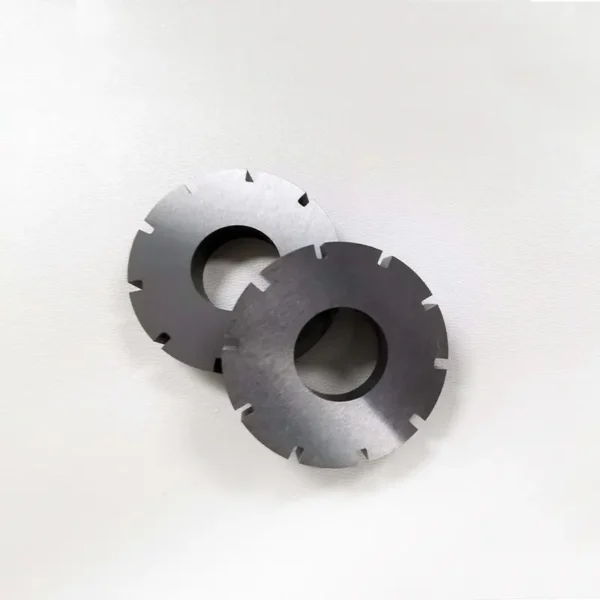

A ceramic ratchet is a precision mechanism, not simply a toothed disk. Build the RFQ around engagement geometry, torque direction, mating pawl or wheel, support conditions, actuation cycle and inspection of the working teeth.
Key Inquiry Requirements
Ratchet function and mechanism context
A silicon nitride ratchet transfers or restricts motion through repeated tooth engagement with a mating element. Its geometry must be understood within the mechanism: identify drive direction, holding direction, release action, tooth count if fixed by design, indexing behavior and the location of support or bearing surfaces. Without that context, a visually correct tooth pattern may still fail to assemble.
Provide the mating pawl, wheel, spring, shaft, carrier or housing information that controls engagement. Show the active tooth flank, clearance flank, root, tip and any lead-in geometry. If the ratchet has a keyed bore, slot, hub or locating face, connect those features to assembly datums and rotational alignment requirements.
Silicon nitride material decisions
Silicon nitride may be considered for ceramic mechanisms exposed to repeated contact, demanding wear interfaces or electrically isolated assemblies. The selected grade and finish remain design inputs, not assumptions. State the material family, approved alternatives, surface requirements and any reason the component cannot be replaced by another ceramic or metal without review.
Material choice alone does not establish ratchet durability. Contact stress, tooth shape, lubrication, contamination, impact, spring force, speed and duty cycle all influence behavior. Describe the mechanism’s operating environment and validation plan so quotations can address the real use case. Where loads are uncertain, identify the range to be confirmed during engineering review.
Tooth geometry and contact control
Ratchet teeth are especially sensitive to profile, pitch, flank angle, root transition and alignment. Define the functional tooth surfaces and their relationship to the rotation axis. Include detail views for small radii, reliefs, chamfers and edge breaks, and state whether these are functional, protective or cosmetic. A general outline drawing is rarely enough for controlled engagement.
The mating element should be inspected with the ceramic part, not treated as background hardware. Check engagement depth, release clearance, backlash, indexing position and contact distribution through the working cycle. If the mechanism must resist reverse motion or hold a position, state how that behavior will be tested and what observations would require design review.
Inspection and mechanism validation
Inspection should combine dimensional control with functional checks. Measure the bore or locating features, radial runout where relevant, tooth geometry, face relationships and visible edge condition against defined datums. Then assemble the ratchet with representative mating parts to review engagement, smooth release, seating, interference and contact marks under the intended installation conditions.
Validation samples should be evaluated using a documented cycle and load method appropriate to the mechanism. Record tooth damage, chipping, wear appearance, noise, slip or indexing changes without assuming that any one observation proves long-term performance. If lubrication or cleaning is part of the design, state the materials and procedure used during comparison.
RFQ content for a custom ratchet
Include the controlled drawing, three-dimensional model, mating-part drawings, actuation sequence, load direction, cycle expectations, environmental conditions and assembly method. Add the required material family, surface finish, packaging orientation and inspection documentation. Explain which features are safety-critical or motion-critical so the quotation can prioritize them appropriately.
Ask for a technical response covering manufacturing assumptions, tooth-form realization, finishing, inspection access, sample configuration and unresolved risks. A useful quotation should also identify where a design review or prototype iteration may be prudent. This supports a realistic comparison of proposals without implying stock availability, guaranteed cycle life or a fixed production route.
Questions Before You Inquire
What mating information is needed for a ceramic ratchet RFQ?
Provide drawings or models for the pawl, wheel, shaft, carrier, spring and housing where they influence engagement. Include drive direction, holding direction, release motion, support conditions and alignment datums. The ratchet’s tooth profile cannot be evaluated reliably without its mating mechanism.
Which ratchet features require close definition?
Define the active and release flanks, pitch, root transitions, tooth tips, bore or locating features, rotational alignment and any reliefs or chamfers. Identify which surfaces are functional. Detail views and datum relationships are valuable when engagement depends on small geometric differences.
How should a ratchet sample be tested?
Assemble it with representative mating parts and use an agreed motion, load and cycle method. Review engagement, reverse holding, release, indexing, interference, contact distribution and visible damage. Record lubrication, contamination and assembly conditions so comparisons remain meaningful.
Can silicon nitride be replaced with another material?
That requires engineering review because tooth contact, wear, impact response, friction, electrical behavior and thermal expansion may change. If alternatives are acceptable, list them in the RFQ with required validation. Otherwise, specify silicon nitride as the material family and request clarification before substitution.
Send a Clear Component Brief
Share your drawing, quantity and application with Porcecore. Mark the requirements that are fixed and the questions that remain open.


Reviews
There are no reviews yet.