

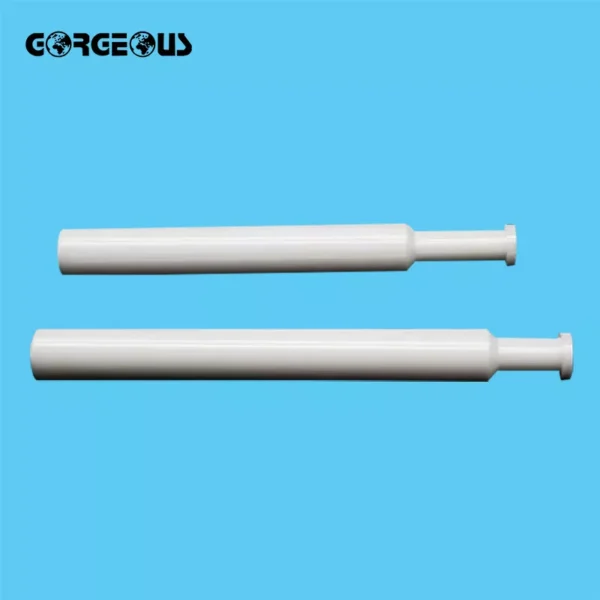
Use this page to structure a technically complete inquiry for a silicon nitride plunger rod. The final design should be evaluated against the mating seal, guide, drive mechanism and fluid exposure rather than selected from a generic material description.
Key Inquiry Requirements
Component role and design intent
A plunger rod transfers motion through a guided or sealed path, so its usefulness depends on the complete assembly rather than on material name alone. For an RFQ, identify whether the rod is reciprocating, rotating, intermittently actuated or exposed to pressure cycling. Show the working end, drive end, guide zones, sealing lands and any shoulders, flats, holes or special profiles that affect installation and service review.
Silicon nitride may be considered where a ceramic rod is relevant to the equipment’s wear, chemical or thermal design priorities, but suitability remains application-specific. Describe the contacting materials, fluid composition, abrasive particles, lubrication practice and cleaning method. A clear duty description helps the supplier assess whether the proposed ceramic grade, finish and geometry should be reviewed together.
Geometry and interface definition
The drawing should establish overall length, stepped diameters, end treatments, transition radii, chamfers and datum references without relying on an illustrative image. Include the dimensions that control insertion, stroke, sealing and alignment. If the rod enters a close guide or seal, identify the functional surfaces separately from non-critical surfaces so quotation assumptions remain visible and technically comparable.
State how the plunger rod connects to its actuator or holder. Threads, bonded joints, clamped ends and interference features create different ceramic design questions, especially around local stress and assembly force. Provide mating-part drawings where possible, along with allowable clearance, installation sequence and any restriction on contact tools. These details help prevent a nominally correct rod from becoming an unusable interface component.
Material and surface considerations
Request the proposed silicon nitride grade or material designation, together with the supplier’s available material data relevant to the application. Ask how the ceramic body, machined surfaces and any finishing operations are controlled. The inquiry can also identify whether the rod must remain free from metallic contamination, loose particles, residues or process-specific surface treatments.
Surface condition should be specified by function, not by an assumed catalogue value. Explain which regions contact seals, guides, fluid or product, and identify whether edges require a defined break or visual acceptance standard. If the rod operates in a clean, corrosive or vacuum-related environment, describe the cleaning, packaging and handling expectations so the quotation addresses the whole supplied condition.
Inspection and qualification planning
A useful inspection plan separates dimensional verification from visual and functional checks. List the critical diameters, straightness or runout characteristics, end geometry, surface marks and identification requirements that matter to assembly. If a test piece, first-article review or sample inspection is needed, state the requested records and acceptance method before quotation.
For qualification, provide representative mating hardware or an assembly-level test description when the rod’s behavior cannot be judged from dimensions alone. Clarify whether evaluation covers leakage, motion, alignment, contamination or repeated cycling. Avoid treating a material certificate as a substitute for part inspection; the buyer should define which evidence supports release and which evidence is informative only.
RFQ package and comparison checklist
Include the controlled drawing, revision, material family, application summary, annual or project quantity assumptions and delivery destination in the RFQ. Add photos only as orientation aids, never as the governing geometry. Mention whether the request is for a prototype, development batch or repeat production without implying stock, minimum order quantity or guaranteed availability.
When comparing quotations, review drawing interpretation, ceramic grade proposal, machining approach, inspection coverage, packaging and stated exclusions. Ask suppliers to identify assumptions about tolerances, sealing surfaces, joining and test responsibility. A concise clarification log is valuable because two offers can appear similar while assigning very different responsibilities for mating hardware, qualification and nonconformance disposition.
Questions Before You Inquire
What information should accompany an RFQ for a silicon nitride plunger rod?
Provide a controlled drawing, revision, operating description, fluid and contamination context, mating-part details, critical dimensions, surface requirements, inspection expectations and intended evaluation stage. Identify motion type, sealing or guiding features, connection method and packaging needs. Photos may support orientation, but the drawing should govern quotation and acceptance.
Can the rod be specified from material and length alone?
Usually not. A plunger rod’s suitability also depends on diameter transitions, alignment, surface condition, end interfaces, guide or seal contact and the surrounding fluid environment. Supplying only material and length leaves important design assumptions unresolved and can make technically different quotations difficult to compare.
How should sealing and guiding surfaces be described?
Mark each functional surface on the drawing and explain its mating component, motion, contact condition and cleanliness requirement. Identify critical edges, transitions and any finish or inspection evidence needed. If a supplier must recommend values, label them as proposals for review rather than silently treating them as approved requirements.
What should be checked when comparing supplier quotations?
Compare how each supplier interprets the drawing, material designation, functional surfaces, inspection plan, packaging and exclusions. Check whether assumptions cover mating hardware, joining, qualification and nonconformance handling. Request clarification where a quotation uses broad terms such as precision, finished or tested without defining the associated method or acceptance basis.
Send a Clear Component Brief
Share your drawing, quantity and application with Porcecore. Mark the requirements that are fixed and the questions that remain open.



Reviews
There are no reviews yet.