
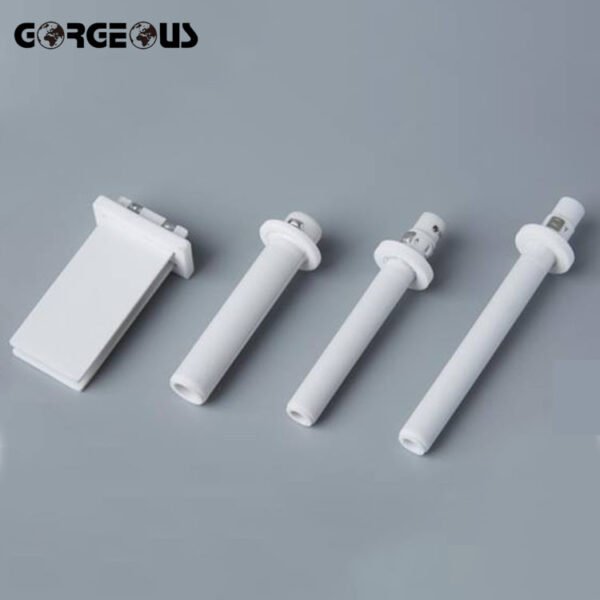


Porcecore helps buyers prepare igniter RFQs around the heated profile, support arrangement, power interface, environment, inspection plan, and application-specific evidence.
Key Inquiry Requirements
Define the Igniter Function
A silicon nitride igniter should be specified by its role within the heating or ignition assembly, not by material and name alone. The RFQ should describe the target application, installation position, heated zone, neighboring parts, airflow or atmosphere, and ignition sequence. Include the complete outline, active region, supports, electrical terminals, insulation clearances, and any protective housing shown in the assembly.
State what the igniter must do during the defined operating sequence, while avoiding unsupported performance promises. Describe energizing conditions, control method, cycling pattern, exposure to fuel or process gases, contamination concerns, and shutdown behavior as applicable. If the part is replacing an existing design, provide the current drawing and identify which features are fixed, under review, or open to technical proposal.
Control the Heated Geometry
Igniter geometry determines how it is mounted, energized, protected, and integrated with the surrounding system. Mark the active heating section separately from cold ends, terminals, mounting legs, and handling surfaces. Include bends, slots, holes, shoulders, radii, clearances, and orientation features. Section views should show how the part sits in the holder and how neighboring components avoid unwanted contact or obstruction.
Ask suppliers to review transitions between heated and supported areas, thin or unsupported features, connector regions, and areas exposed to thermal gradients. The quotation should explain any geometry assumptions and identify features that may require a design review. Do not infer electrical or heating values from a product title; define the required test conditions and evidence only when the application owner has established them.
Material and Environment Review
Silicon nitride is the named material family, but the RFQ should still identify the required grade basis or request an approved proposal. Compare the material choice against the actual gas or fuel environment, contamination sensitivity, thermal cycling, mechanical restraint, electrical isolation needs, and cleaning conditions. If coatings, terminals, or joined elements are included, define their scope and compatibility rather than treating the ceramic alone as the full igniter.
Request material and process documentation appropriate to the application, including identification, traceability, and any controlled records required by the buyer. If another ceramic or construction is proposed, require a written comparison covering the active geometry, mounting, electrical interface, environment, and inspection changes. This keeps substitutions visible and prevents a seemingly similar heating element from being evaluated on material name alone.
Mounting and Electrical Integration
The mounting system is part of the igniter specification because restraint, alignment, and electrical connection can affect the assembly. Provide holder drawings, support materials, terminal details, connector orientation, insulation distances, and installation sequence. Identify whether the supplier is responsible for a bare ceramic element, an igniter subassembly, or a component with terminals and protective parts. Show service access and replacement constraints where relevant.
Ask for a clear interface review covering fit, orientation, lead attachment, strain relief, and contact protection. The RFQ should separate part-level dimensional acceptance from assembly-level electrical or functional checks. If the buyer will complete the final wiring or installation, state the boundary. This prevents quotation gaps around terminals, fixtures, joining, and the test conditions used to release the finished igniter.
Qualification and RFQ Evidence
A complete igniter RFQ combines the controlled drawing, application description, mounting arrangement, electrical interface, environment, cleaning or handling rules, inspection criteria, and qualification plan. Define which checks apply to the ceramic body and which apply only to the assembled igniter. Potential evidence may include dimensional inspection, visual examination, material documentation, continuity or isolation checks, and a buyer-defined functional test.
Request deviations, assumptions, unresolved questions, and the proposed evidence schedule with each quotation. If a sample or first-article evaluation is needed, specify the fixture, energizing sequence, environmental conditions, observation points, and approval process. Avoid asking for a generic guarantee of heating efficiency or service life. A controlled qualification plan produces more useful evidence for this application-specific component.
Questions Before You Inquire
What should an igniter drawing show?
Show the full outline, active heated zone, cold ends, terminals, supports, bends, slots, radii, clearances, and orientation features. Include holder and neighboring-part interfaces in assembly views. Mark critical regions separately so dimensional and visual inspection can focus on the features that affect installation and operation.
Does the RFQ need electrical specifications?
Yes, where the application has defined them. State the electrical interface, connection method, insulation requirements, control conditions, and applicable checks. Do not invent voltage, current, resistance, or heating values. If those values are still being developed, request a technical review rather than allowing assumptions to enter the quotation.
Should the igniter be quoted as a ceramic part or assembly?
Specify the scope clearly. A ceramic-only quote covers the shaped silicon nitride component and its defined inspection. An assembly quote may include terminals, joining, supports, insulation, leads, or housing. Include an assembly drawing and responsibility boundaries so functional testing and installation obligations are not ambiguous.
How should an igniter qualification test be defined?
Define the fixture, energizing sequence, atmosphere or gas conditions, cycling pattern, observations, measurements, and acceptance criteria established by the application owner. Separate sample evaluation from routine inspection. Avoid relying on broad claims such as efficiency or long life unless the test method and required evidence are explicitly documented.
Send a Clear Component Brief
Share your drawing, quantity and application with Porcecore. Mark the requirements that are fixed and the questions that remain open.


Reviews
There are no reviews yet.