

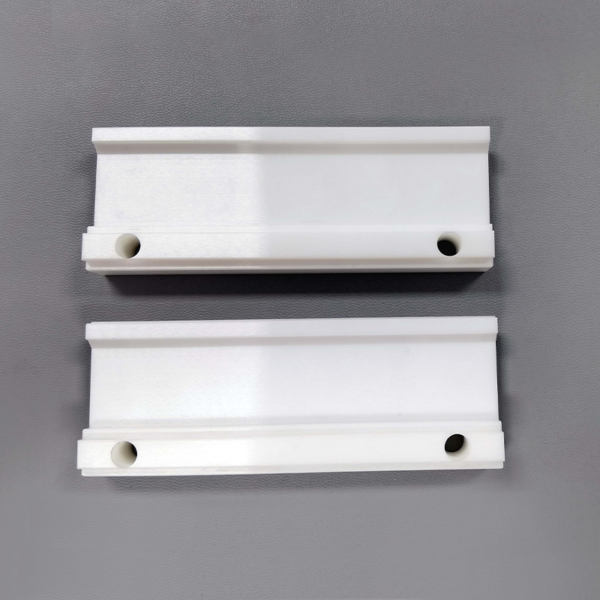

Use this page to define a zirconia insulating structural part as an engineered assembly element. Show how it locates and supports neighboring hardware, what must remain electrically separated and which surfaces require controlled inspection.
Key Inquiry Requirements
Explain the structural and insulating role
An insulating structural part may carry compressive load, establish alignment, maintain clearance or separate conductive components while remaining fixed in an assembly. State which of these functions is primary and which are secondary. Identify the load direction, retention method, contact surfaces and electrical separation path. This context prevents the part from being treated as an interchangeable spacer when its geometry is assembly-critical.
Describe movement, adjustment and service access. Note whether the component experiences clamping, vibration, thermal cycling, repeated installation or contact with fluids and cleaning agents. Identify nearby conductors, fasteners and grounded surfaces. The supplier needs the surrounding architecture to understand which edges, holes, shoulders and faces require control, without making an unsupported guarantee about insulation or structural performance.
Define the part through interfaces
The drawing should show the complete envelope, mounting holes, locating features, bosses, shoulders, slots and clearance zones. Establish datums from the surfaces that locate the part in the assembly, not merely from convenient outer edges. Mark functional faces and indicate where contact, alignment or electrical separation depends on the geometry. Provide section views when internal steps or hidden interfaces affect installation.
Separate fit-critical dimensions from general body dimensions and identify the inspection method for each important feature. If the component interfaces with metal, seals, electrodes or other ceramics, include the relevant mating references. Clarify whether dimensions apply to the finished part and how any inserts, coatings or secondary operations are represented. Controlled geometry reduces ambiguity during quotation and assembly review.
Review material and processing choices
Zirconia is a material family with processing and grade choices that can influence the finished part’s behavior and manufacturability. Ask suppliers to state the proposed designation, forming method, sintering approach and finishing operations. Request information that supports comparison while distinguishing typical capability from contractual requirements. If the part has thin walls, deep features or tight alignment needs, invite a manufacturability review tied to the drawing.
Describe the actual service environment, including temperature cycling, atmosphere, moisture, chemicals, electrical potential, contact pressure and mechanical loading. Explain whether surfaces must remain clean, smooth or free from process residue. If a supplier recommends a geometry change, require the proposal to identify the affected interface and rationale. The buyer should approve such changes through controlled design review rather than accepting them implicitly.
Create functional inspection criteria
Inspection should connect directly to assembly risk. Consider locating dimensions, hole position, wall thickness, flatness, alignment, clearance distances, contact faces and visible damage. Define datum references, measurement methods and the required record format. If insulation depends on a particular path or gap, describe how that geometry will be verified instead of relying on a general statement that the ceramic is electrically insulating.
For structural features, identify which surfaces or dimensions control load transfer and seating. For insulating features, identify which edges or distances control separation. Decide whether first-article inspection, sample approval or lot documentation is appropriate. A clear plan helps suppliers quote inspection effort accurately and gives the buyer evidence that the delivered part matches the approved design intent.
Organize the RFQ for comparison
Send the released drawing with assembly views, mating references, material family, operating conditions, quantity assumptions and quality expectations. Include installation torque or fastening information only when it is known and controlled by the design authority. State the destination, packaging concerns and any document requirements without implying a particular supplier capability or delivery promise.
Request a response that lists assumptions, exclusions, proposed material designation, process route, inspection scope and deviations. Ask suppliers to identify risks associated with feature complexity, handling or finishing. If several structural parts form one assembly, use a coordinated part-number schedule and indicate shared datums. This allows technical proposals to be compared on interfaces, evidence and risk rather than on a generic insulation claim.
Questions Before You Inquire
What belongs in an RFQ for zirconia insulating structural parts?
Include a controlled drawing, assembly views, mating references, material family, load and electrical-clearance requirements, environmental conditions, quantity assumptions and inspection expectations. Explain how the part is retained and located. If hidden interfaces or stack-ups matter, provide sections or controlled excerpts so suppliers can interpret the structural role correctly.
How should electrical isolation be represented on the drawing?
Show the conductive neighbors, separation path, clearance zones and relevant datums. Identify which dimensions or surfaces control isolation, then define the verification method. Avoid relying only on the word insulating. The final requirement should connect the material designation and finished geometry to the assembly’s actual electrical architecture.
Which structural details require special review?
Review holes, thin walls, shoulders, slots, bosses, unsupported spans, locating faces and transitions that transfer load or control alignment. Their importance depends on the assembly and service conditions. Ask suppliers to identify manufacturability concerns and proposed deviations, then approve changes through controlled drawing or design-review documentation.
Can zirconia insulating parts be specified from a sample?
A sample can help communicate form, but it should not replace a controlled drawing and functional definition. Confirm dimensions, datums, material designation, mating interfaces, electrical clearances and inspection requirements before release. If the sample is an existing qualified part, document what is being matched and which characteristics remain subject to verification.
Send a Clear Component Brief
Share your drawing, quantity and application with Porcecore. Mark the requirements that are fixed and the questions that remain open.


Reviews
There are no reviews yet.