
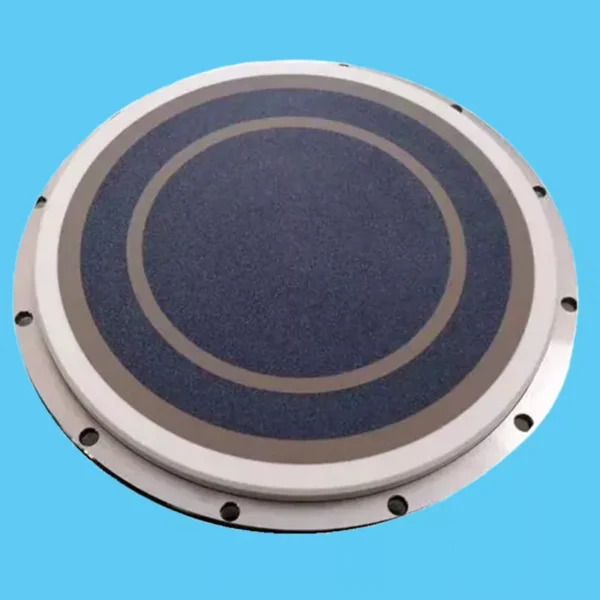
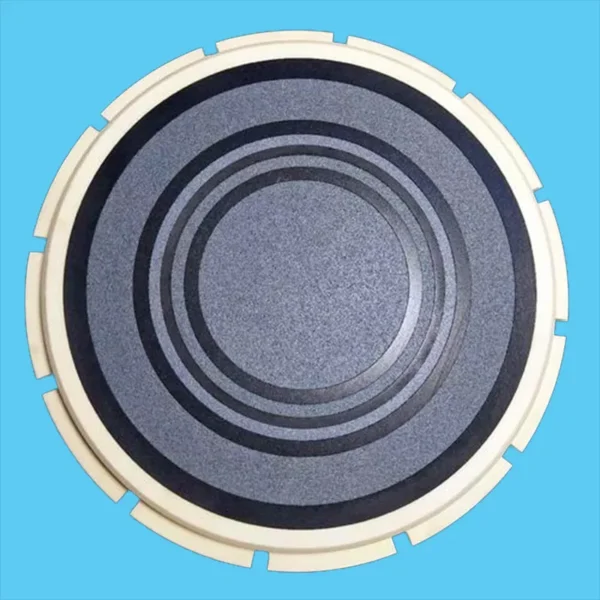

Define the chuck around the part it must hold, the vacuum path it must connect to and the surface condition needed to protect the workpiece.
Key Inquiry Requirements
Workpiece and support definition
Begin with the workpiece rather than the chuck outline. Provide its dimensions, thickness, stiffness, backside texture, allowable contact area and any fragile or contamination-sensitive regions. Explain whether the chuck must support a full panel, discrete parts, thin films or irregular shapes. The support map should show exclusion zones for sensors, alignment features, cutouts and process access.
Define how the workpiece is loaded, aligned, released and cleaned. A chuck used for repeated manual loading may need different edge treatment and access features from one integrated into an automated cell. Include gravity orientation, expected movement during processing and the consequences of a partial seal. These details help the supplier distinguish holding, positioning and surface-support requirements.
Porosity and vacuum architecture
Porous ceramic behavior depends on material structure, thickness, active area and the connected vacuum design. The RFQ should identify the required vacuum connection, manifold arrangement, zones, ports, grooves, plugs and sealing boundaries. If multiple workpiece formats use the same chuck, show the active patterns and how unused regions are isolated or tolerated.
Do not specify porosity only as a general product label. Ask for the supplier’s proposed basis for pore structure, permeability characterization, surface treatment and cleaning route, then compare it with the vacuum source and process cycle. The appropriate technical limits depend on the workpiece and system, so they should be validated through application testing rather than inferred from a photograph.
Surface protection and cleanliness
The top surface is part of the workholding interface and should be defined with care. State the required flatness, surface texture, edge profile and allowable particles or damage, particularly when the workpiece is thin, polished or optically sensitive. Identify whether contact marks, imprinting, scratching or trapped debris would affect downstream processing or inspection.
Describe the cleaning chemistry, drying method, vacuum exposure and process atmosphere. If the chuck will encounter powders, liquids, films or reactive vapors, include those conditions in the technical brief. Cleanliness is not a generic ceramic attribute; it depends on processing, handling and packaging controls that must be agreed between buyer and supplier.
Inspection and functional trials
Dimensional inspection may include overall thickness, active-area location, mounting features, flatness, parallelism, port geometry and datum relationships. Functional evaluation may also be appropriate for vacuum response, zone isolation, leak behavior or workpiece support, but the test setup must be defined. State the reference workpiece, vacuum equipment, measurement points and pass criteria before results are compared.
Inspect the porous surface for chips, blocked areas, contamination and unacceptable local defects using a documented method. If the chuck is part of a qualified process, request sample records or a first-article plan suited to that process. Avoid treating a single vacuum reading as universal evidence when workpiece size, sealing and system plumbing can change the outcome.
Preparing the chuck RFQ
Send the chuck drawing or layout, workpiece drawings, vacuum schematic, mounting interface, process conditions, cleaning requirements and quantity assumptions. Include photographs only as supporting context. Mark all zones, ports, datum features, edge restrictions and replaceable items. If several formats are involved, provide the loading sequence and the expected changeover method.
Ask the supplier to identify material assumptions, porous-body construction, machining steps, surface finishing, inspection scope and functional-test limitations. Clarify whether a prototype trial is needed before design release. A complete RFQ should make the workholding objective measurable while leaving room for engineering review of porosity, manifold design and process compatibility.
Questions Before You Inquire
What information is essential for a porous vacuum chuck RFQ?
Provide the workpiece drawing, contact map, dimensions, stiffness or fragility concerns, vacuum schematic, mounting details, process atmosphere, cleaning method, surface requirements and quantity. Include active zones, ports, alignment features and acceptance tests. The supplier needs the complete workholding context, not just an outer chuck outline.
Can a porous vacuum chuck support different part sizes?
It may be possible when the active areas, sealing boundaries and vacuum zones are designed for the intended formats. The buyer should provide every workpiece layout and loading method. Compatibility must be reviewed through geometry and application trials; a generic porous surface does not automatically suit multiple formats.
Which surface characteristics should be reviewed first?
Review flatness, parallelism, surface texture, edge condition, cleanliness and the location of any ports or grooves. Then consider how those features interact with the workpiece backside and process. Critical limits should be documented with measurement methods, because visual inspection alone may not reveal all functional issues.
Does the chuck description guarantee holding force?
No. Holding behavior depends on porous structure, active area, workpiece sealing, vacuum source, plumbing, surface condition and process setup. A drawing-led quotation can define the intended test and acceptance basis, but application-specific holding performance should be confirmed using an agreed test configuration.
Send a Clear Component Brief
Share your drawing, quantity and application with Porcecore. Mark the requirements that are fixed and the questions that remain open.


Reviews
There are no reviews yet.