

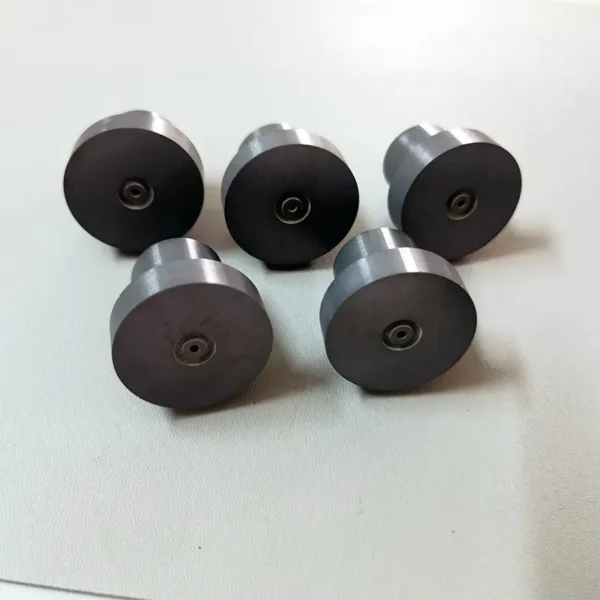


Document the nozzle’s process duty, internal passage, outlet, mounting interface, exposure conditions and inspection method so suppliers can evaluate the complete component rather than a silhouette.
Key Inquiry Requirements
Start with the nozzle function
Describe what the nozzle delivers, directs, separates or protects, and identify its position in the equipment. Explain the incoming path, outlet interaction, surrounding components and service sequence. The same outer tube can serve very different purposes, so the RFQ should establish whether alignment, flow direction, shielding, wear resistance or contamination control drives the design.
Silicon nitride is a material family, not a finished nozzle specification. State the reason for selecting it and the environment it will encounter, then ask suppliers to identify the proposed grade and processing route. Include contact with gases, liquids, powders, particles or adjacent materials where relevant, without assuming a universal suitability claim.
Define the internal passage
The internal passage is usually the nozzle’s primary functional feature. Show its full profile, entrances, exits, tapers, steps, radii and transitions with section views. Identify the datum scheme used to control concentricity or alignment between the passage and outside mounting surfaces. If the outlet shape affects the process, define that shape directly rather than describing it as a standard nozzle.
State which surfaces may be machined, polished, coated or left in the as-formed condition. Explain how the passage will be inspected and cleaned, especially when small transitions or blind areas are involved. A supplier should be able to distinguish the process-critical flow path from nonfunctional external geometry before proposing a manufacturing route.
Control mounting and alignment
Show the nozzle’s holder, sleeve, clamp, seal, electrode, carrier or other mating hardware in an assembly sketch. Define insertion depth, locating shoulders, retention method, clearances and the direction of installation. If the nozzle must align with a target or opposing part, specify the relevant axis and reference surfaces instead of relying on an overall length alone.
Describe whether the interface is loose, sliding, clamped, bonded or otherwise constrained. Note any assembly compound, support ring or thermal expansion gap that affects the ceramic. Ask suppliers to identify where their proposal depends on the mating hardware, because a nozzle cannot be evaluated reliably when the locating strategy remains undefined.
Review exposure and inspection
List the operating environment in terms of process exposure, cycling, contact, cleaning and handling. Identify whether the outlet, rim, external wall or mounting end is the most vulnerable region. The RFQ should describe contamination concerns, permissible surface damage and any non-contact zones. Keep environmental information factual and application-specific rather than requesting an unsupported universal performance guarantee.
Inspection should cover the features that control flow and fit: internal passage, outlet, wall condition, alignment surfaces, cracks, chips and cleanliness where applicable. Define measurement equipment or method, sampling and reporting requirements. If a process trial is planned, provide the fixture and evaluation criteria so a qualification sample is judged in a meaningful configuration.
Structure the supplier response
Send the controlled drawing, process sketch, assembly context, material expectations, inspection plan and revision history together. Identify whether the request concerns a new nozzle, a replacement form, a prototype or a repeatable supply arrangement. State which dimensions are fixed and which areas may receive engineering recommendations, then request deviations in a marked-up format.
A useful quotation should identify material grade, forming or machining assumptions, finishing, cleaning, inspection evidence and open questions. Ask suppliers to separate included work from exclusions and proposed alternatives. This gives the buyer a clear basis for comparing passage control, mounting compatibility and quality evidence without implying that a pictured nozzle is produced by Porcecore.
Questions Before You Inquire
What is most important on a silicon nitride nozzle drawing?
Show the complete internal passage, outlet geometry, axis references, mounting surfaces, locating features and critical external dimensions. Add an assembly sketch for the holder or carrier. Identify surfaces that control flow, alignment, sealing or retention, and state how those features will be inspected.
Can the nozzle be specified by outside dimensions only?
Usually not when the internal passage controls the process. Outside dimensions may establish fit, but they do not define the inlet, transitions, outlet or alignment relationship. Provide section views and process context, then identify which internal features are fixed requirements and which may be proposed by the supplier.
What material information should be requested?
Request the proposed silicon nitride grade or material definition, processing assumptions, finishing state and any cleaning or coating considerations relevant to the application. Ask suppliers to identify substitutions before approval. The right material specification depends on exposure, mechanical support, thermal conditions and the required inspection evidence.
How should a ceramic nozzle be inspected?
Base inspection on the flow path and mating interfaces. Typical categories include passage dimensions, outlet condition, alignment surfaces, visual defects, cleanliness and fit-related dimensions. Define the method, datums, sampling and report format in advance. Add an assembled trial only when its fixture and acceptance criteria are specified.
Send a Clear Component Brief
Share your drawing, quantity and application with Porcecore. Mark the requirements that are fixed and the questions that remain open.


Reviews
There are no reviews yet.