


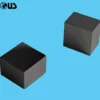

Define the block through its working faces, support conditions, material grade and acceptance criteria. Use the RFQ to compare technically traceable proposals rather than assuming a standard block, stock item or guaranteed service life.
Key Inquiry Requirements
Block function and working geometry
A boron carbide ceramic block should be specified by the surfaces and interfaces that perform its role. Define the envelope, working faces, mounting features, holes, recesses, tapers, edge treatments and orientation on a controlled drawing. Identify which faces contact a moving, abrasive or supporting part, and distinguish them from non-functional surfaces. This helps the supplier understand where geometry and condition have the greatest consequence.
Show how the block is installed, retained and replaced if it forms part of a wear assembly. Include backing plates, fasteners, bonding layers, pockets or neighboring blocks where they affect fit. If several blocks form a pattern, provide the layout and numbering method. Clear datum references and assembly views are especially useful when small gaps, offsets or edge relationships influence the finished installation.
Material definition and process review
Name boron carbide as the required material family and ask the supplier to identify the proposed grade, composition basis and manufacturing route. A statement that the material is hard or wear resistant does not replace a material specification. Describe the intended duty and contact conditions so the proposed grade can be reviewed in relation to the design, environment and inspection requirements.
Ask how the process will produce the block’s dimensions, edge details, holes and working surfaces. Clarify whether machining, grinding or other secondary operations are planned, and which characteristics each operation controls. Suppliers should identify process limits, finishing assumptions and possible feature substitutions before quotation. This makes proposals comparable and keeps material selection connected to the actual geometry rather than a generic product label.
Wear interface and application context
Explain what causes wear in the intended assembly: sliding contact, impact, particle flow, rubbing, cutting or another mechanism. Include the counterpart material, contact pattern, movement, loading arrangement and presence of moisture, chemicals or process media where relevant. These details support a meaningful technical review, while avoiding unsupported claims about service duration or guaranteed resistance.
The block’s support can be as important as its material. Show backing stiffness, bonding or clamping, edge restraint, thermal exposure and any expected replacement access. Identify whether the block must be flush, recessed, segmented or removable. Ask suppliers to comment on foreseeable interface risks and installation assumptions, but retain final validation of the complete wear system with the equipment designer.
Inspection of edges and working faces
Define inspection for envelope dimensions, working-face condition, flatness or profile where relevant, mounting features, hole locations and edge treatments. State the datum scheme and identify characteristics requiring recorded results. If the design depends on a particular surface orientation or contact area, include that relationship in the inspection plan. A useful acceptance specification describes measurable conditions rather than relying on broad statements about quality.
Handling and packaging deserve emphasis because ceramic blocks may be vulnerable at corners, edges and machined features. Specify protection for working faces and mounting details, and ask for a receiving inspection approach. Define how chips, cracks, surface marks or other visible conditions will be evaluated by location and function. This supports a consistent decision when blocks arrive before installation or assembly.
RFQ structure and supplier comparison
Provide the current drawing, revision, assembly context, block quantity, material family, application description and inspection requirements. Include the wear mechanism, counterpart, support method and any replacement constraints. Request proposed grade, process outline, finishing operations, packaging and documentation. If a drawing contains preliminary dimensions, mark them clearly so suppliers do not interpret concept values as final acceptance requirements.
Compare responses by technical traceability: material designation, manufacturing route, feature capability, working-face treatment, inspection evidence, packaging and deviations. Ask each supplier to return a marked-up drawing or requirement matrix. Review whether the proposal addresses the complete block and installation, not just the raw ceramic material. This approach helps distinguish genuinely comparable offers from descriptions that use the same component name with different assumptions.
Questions Before You Inquire
What application information is useful for a boron carbide block RFQ?
Describe the wear mechanism, counterpart material, movement, loading, particles or media, support arrangement and replacement method. Also show whether the block is bonded, clamped, recessed or segmented. This context helps suppliers review grade and geometry without promising a service life that has not been validated.
How should working faces be identified?
Mark them directly on the drawing and connect them to datums, orientation and inspection requirements. Explain whether each face must be flat, profiled, flush, recessed or otherwise controlled. Include the mating component or assembly view when contact area, edge position or replacement access affects function.
Are hardness or wear claims enough to select the material?
No. A material claim alone does not define grade, process, geometry, support or actual service conditions. Ask suppliers to state the proposed boron carbide grade and manufacturing route, then review those details against the wear mechanism and complete assembly. Qualification should support any final performance decision.
What should be checked when blocks arrive?
Check packaging condition, count, identification, overall dimensions, working faces, mounting features, edges and visible damage against the agreed plan. Record deviations by location and photograph questionable areas. If the block has a critical orientation or pattern position, verify it before installation rather than relying only on appearance.
Send a Clear Component Brief
Share your drawing, quantity and application with Porcecore. Mark the requirements that are fixed and the questions that remain open.
Reviews
There are no reviews yet.